Local Guides
Colorbond Corrosion In Cairns Salt-Air Suburbs
The Roof Repair Cairns Team · Published 2026-04-30 · Updated 2026-04-30
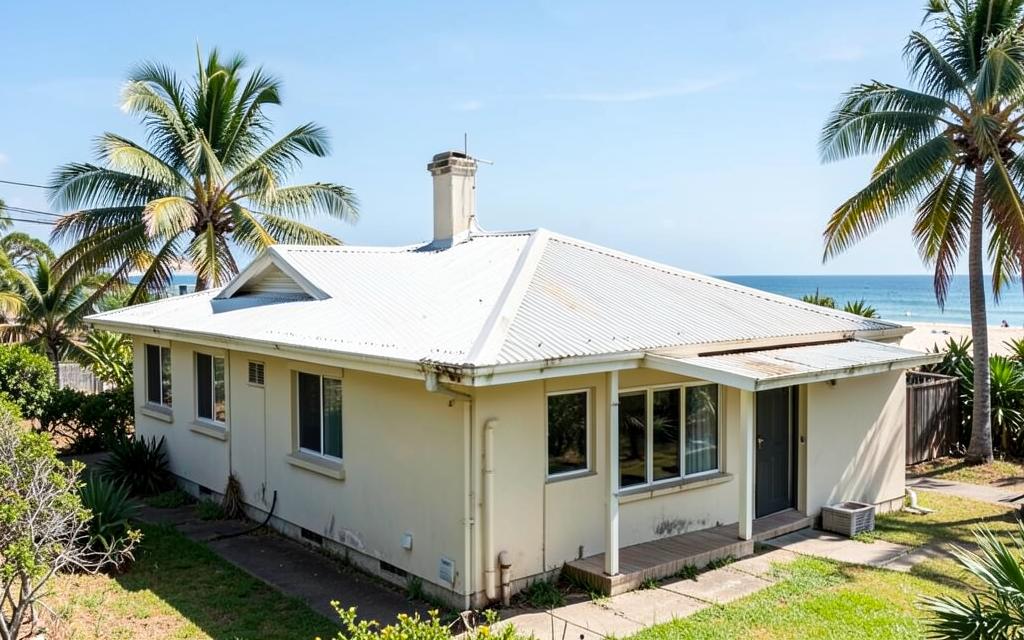
Two identical metal roofs, one at Trinity Beach and one at Redlynch, will not age the same way. Airborne salt keeps surfaces chemically active for far longer than rain alone, and in the wet tropics that combines with humidity and heat to accelerate corrosion — particularly anywhere the protective coating has been cut, drilled or scratched.
Where coastal corrosion starts
- Cut sheet ends at gutter lines, where the coating stops and bare steel is exposed.
- Fastener heads and the seal washer beneath them.
- The base of the gutter, where salt-laden grit and leaf litter hold moisture.
- Valley irons under long-term debris.
- Contact points between dissimilar metals, which corrode faster together.
Why material selection matters more here
Within a few hundred metres of surf, standard fixings and standard-grade sheeting are simply the wrong specification. Coastal repairs should use marine-grade or coastal-rated fasteners and appropriate coated sheeting, with compatible metals throughout. Using the same parts you would use inland is the single most common reason a coastal repair fails early — and it looks fine for the first year, which is why it keeps happening.
Maintenance that genuinely extends coastal roof life
- Freshwater rinsing of roof and gutters where practical, especially in the drier months.
- Keeping gutters and valleys clear so salt-laden debris cannot sit against metal.
- Treating rust spots early, before perforation, with proper preparation and anti-corrosive primer.
- Inspecting fixings before cyclone season, since corroded screws reduce uplift capacity.
On sound but weathered coastal sheeting, a prepared and primed anti-corrosive coating system can add years before replacement becomes necessary. Where perforation has already spread through the sheet field, coating is a cosmetic delay rather than a fix, and we will tell you that plainly.