How-To
How to Find a Roof Leak in a Tropical Climate
The Roof Repair Cairns Team · Published 2026-02-04 · Updated 2026-02-04
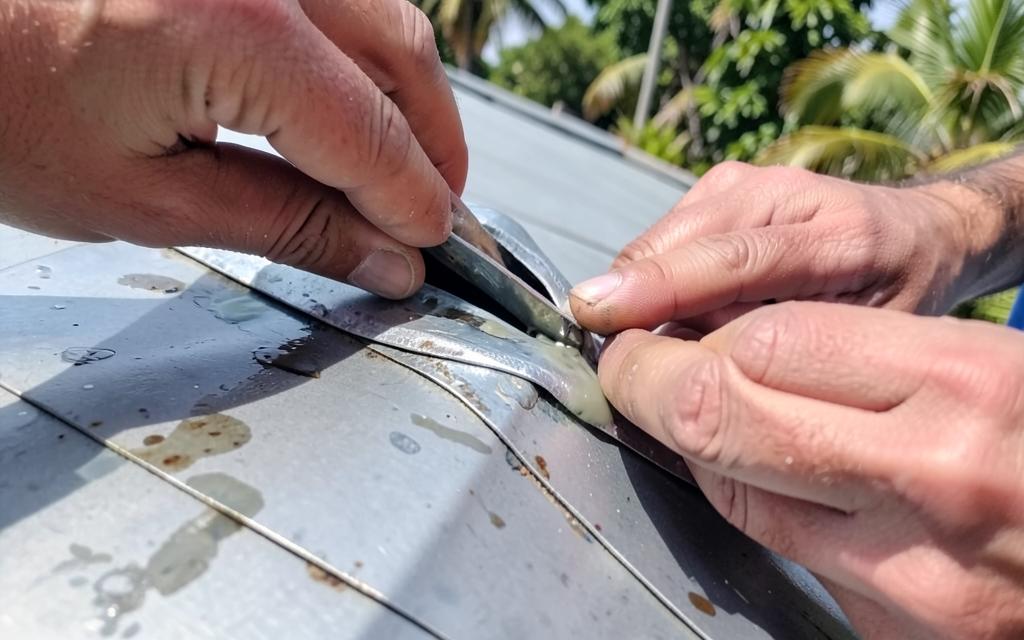
Water entering a Cairns roof rarely falls straight down. It runs along battens, follows purlins and drips off the lowest point it reaches, which can be metres from where it got in. Any leak hunt that starts and ends at the ceiling stain is going to miss.
Step 1: map the evidence inside
Note exactly where the water appears, and under what conditions. Heavy vertical rain, wind-driven rain from one direction, or only after prolonged rain all point to different causes: capacity, flashing failure and blocked drainage respectively.
Step 2: inspect the roof space
With a torch, follow the trail upwards. Fresh water marks, rust trails on the underside of sheeting, damp timber and stained insulation show the travel path. This is the step that turns a guess into a direction.
Step 3: check the junctions, not the surface
- Wall and apron flashings, especially where an extension meets the original roof.
- Valley irons — look for corrosion at the fold and debris packed above it.
- Penetrations: vents, aerials, solar mounts, air conditioning brackets.
- Sheet laps and ends, and ridge or barge flashing upturns.
- Fixings: perished washers and backed-out screws.
- Gutter line: overflow marks on fascia mean drainage, not roof surface.
Step 4: water test from the bottom up
Start well below the suspected area and work upwards in stages, giving each stage time to show a result. Starting at the top floods everything below it and tells you nothing. This is the only reliable way to confirm a suspected entry rather than sealing three places and hoping.
Step 5: repair the cause, then verify
Fix the confirmed cause properly — replace the failed component rather than smearing sealant over it — then retest. A repair that has not been verified under water is an assumption.
If the trail runs cold, that is normal: leaks with several contributing paths are common on older Cairns roofs with multiple extensions. That is when a systematic professional inspection saves money.